Community Gardening
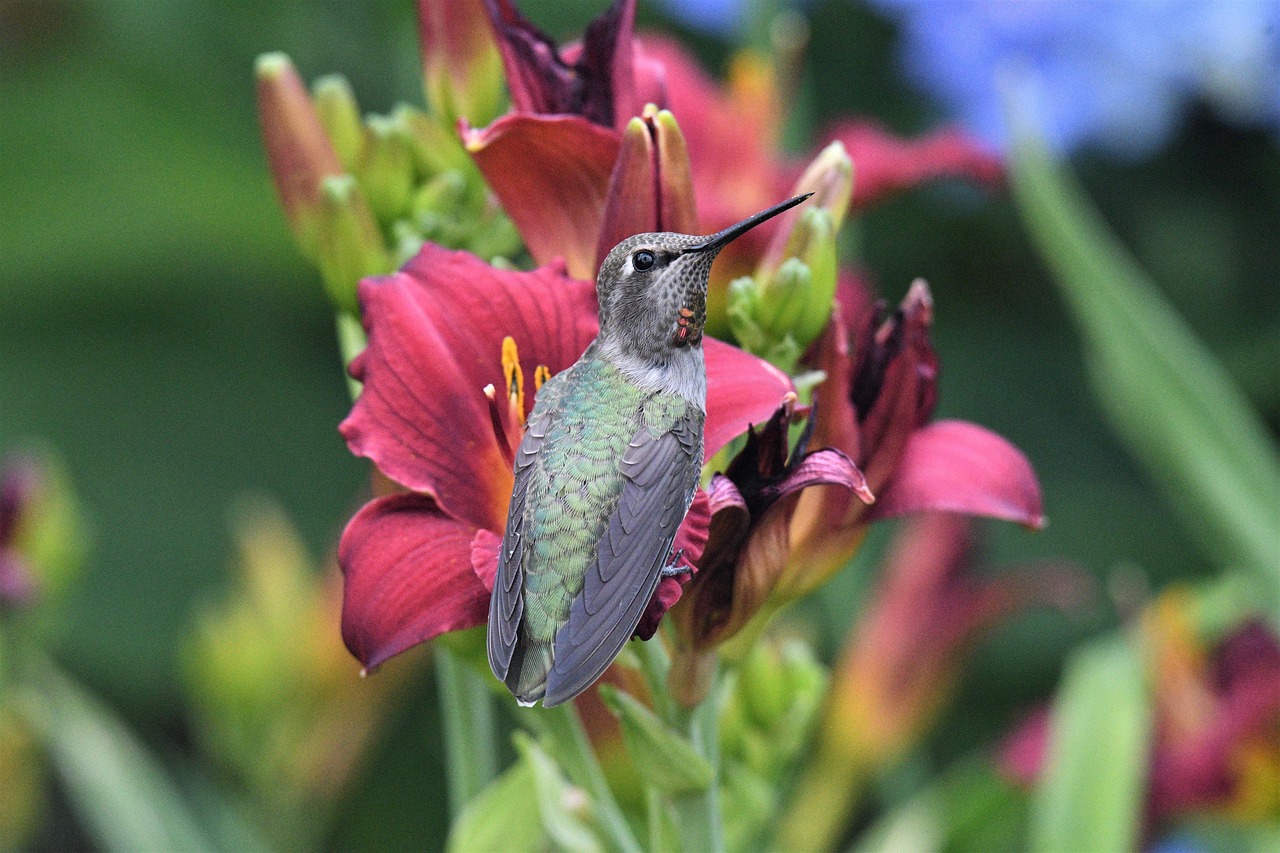
Most people gauge their hummingbird garden by one measure: how often the feeder gets emptied. That's a useful data point, but it's far from the whole story. Hummingbirds are creatures of habit, and they leave clues about how they're using your space—if you know what to look for.
The first sign that your garden is working is repetition. A hummingbird that visits once might be passing through. A hummingbird that visits at the same time every day, often from the same direction, has likely added you to its route. Hummingbirds have excellent spatial memory. They remember which flowers were productive and when.
Another clue is territorial behavior. If you see a male hummingbird chasing off intruders—other hummingbirds, large bees, even butterflies—he's claiming your garden as his own. That's a strong signal that your space has enough resources to be worth defending. Males often perch on a high, bare branch between patrols, so a dead branch or a tall stake can become a favorite lookout.
Listen, too. Hummingbirds are not silent. They make a variety of chips, twitters, and scolding notes. A male in display makes a sharp, repetitive call. A female approaching a feeder might give a soft tick. If you hear these sounds regularly, your garden has become part of their communication network.
Not all signs are obvious. Look for hovering behavior near flowers that aren't in bloom yet. Hummingbirds sometimes check plants that were productive, even after the flowers have faded. That's a sign they've learned your garden's rhythms.
Watch for bathing. If a hummingbird dips into a water feature, flutters, and shakes, that's a bird that feels safe. Bathing is a vulnerable activity, and hummingbirds don't do it in places where they're constantly on edge. A bird that bathes in your garden has decided it's a safe haven.
Nesting is the ultimate endorsement, but it's also the hardest to spot. Hummingbird nests are tiny—about the size of a walnut—and often camouflaged with lichen. Look for a small cup-shaped structure on a horizontal branch, often in a shrub or tree near a nectar source. If you find one, keep your distance. Disturbing a nest can cause the female to abandon it.
Another sign is insect hunting. If you see a hummingbird hovering near foliage, darting at tiny specks, it's hawking insects. That's a good sign that your garden supports a healthy insect population, which is essential for feeding chicks.
If you're seeing lots of feeder visits but no territorial behavior, your garden might be a gas station rather than a home base. That's fine, but you can make it more attractive by adding native plants that provide natural nectar and by leaving some messy corners for insects.
If you're seeing hummingbirds but they seem skittish, check for predators. Cats, in particular, are a major threat. Keeping cats indoors or using a catio protects birds and gives hummingbirds the confidence to linger.
If you're not seeing hummingbirds at all, don't despair. It can take a season or two for word to get around. Keep your feeders clean, your flowers blooming, and your water fresh. Hummingbirds are curious, and they'll find you. The signs will come—first a flyby, then a hover, then a regular visitor. That's how a garden becomes a habitat.
