Hummingbird Behavior
Most hummingbird gardens focus on food. That makes sense. Nectar is the headline, and flowers are the obvious draw. But spend enough time watching hummingbirds and you will notice something else: they are almost always looking for water. Not a deep birdbath, not a pond with steep sides, but something shallow, moving, and safe. A place to bathe, to cool off, and to rest.
Hummingbirds bathe differently than most birds. They do not splash around in open water. Instead, they prefer to flutter through a fine mist, a dripping leaf, or a shallow film of water just deep enough to wet their feathers. A traditional birdbath, with its two-inch depth and slippery slope, is often more hazard than help. The good news is that creating the right kind of water feature is inexpensive and takes up very little space.
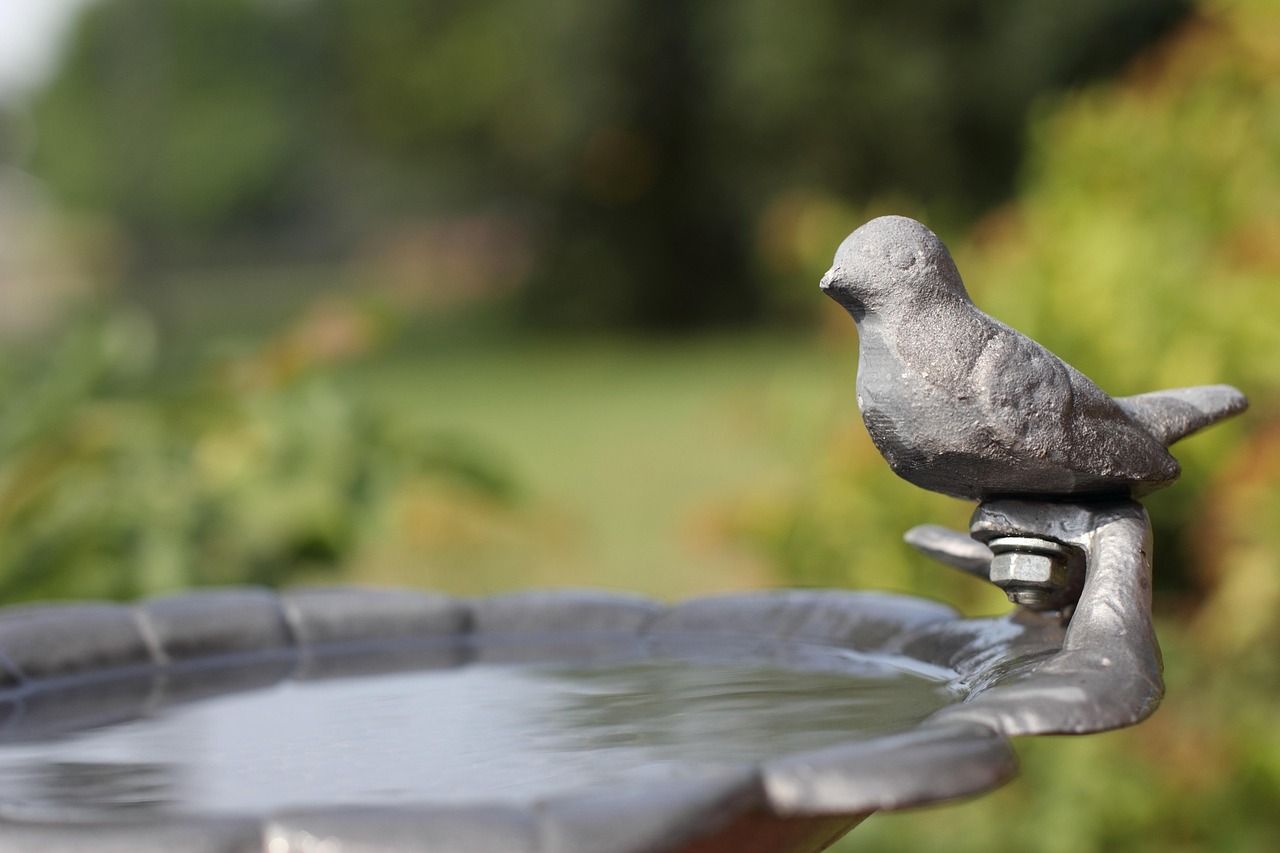
The ideal hummingbird bath is shallow, moving, and elevated. Think of a small saucer, no more than an inch deep, placed on a pedestal or nestled into a rock. Add a gentle drip or a tiny recirculating pump so the water moves and glints in the sun. Hummingbirds are drawn to the sparkle of moving water, and the motion also keeps mosquitoes from breeding. If you do not want to run electricity, a simple hanging dripper attached to a tree branch works beautifully. Fill it in the morning, and by afternoon you may have a line of tiny visitors.
Placement matters as much as design. Put your water feature within ten to fifteen feet of your nectar plants, but not directly underneath them. Hummingbirds like a clear sightline while bathing so they can watch for danger. A spot with dappled shade is ideal, since it keeps the water cooler and gives birds a place to preen afterward. If you have cats in the neighborhood, keep the bath at least three feet off the ground and away from low shrubs where a predator could hide.
Once hummingbirds know your water source is reliable, they start to treat your garden differently. Instead of a quick refueling stop, it becomes a territory. You may see a male perched nearby, guarding both the feeder and the bath. You may catch a female making repeated trips, a sign that she is nesting somewhere close. Water is often the missing piece that turns a collection of pretty plants into a functioning habitat.
Other pollinators benefit too. Bees sip at the edges, butterflies puddle in the damp soil, and dragonflies patrol overhead. A small water feature becomes a hub, a gathering place for the tiny lives that make a garden feel alive. If you have been on the fence about adding water, start small. A shallow dish, a dripping hose, a few smooth stones for perching. The hummingbirds will teach you the rest.
